 Reviews


 Proudly American


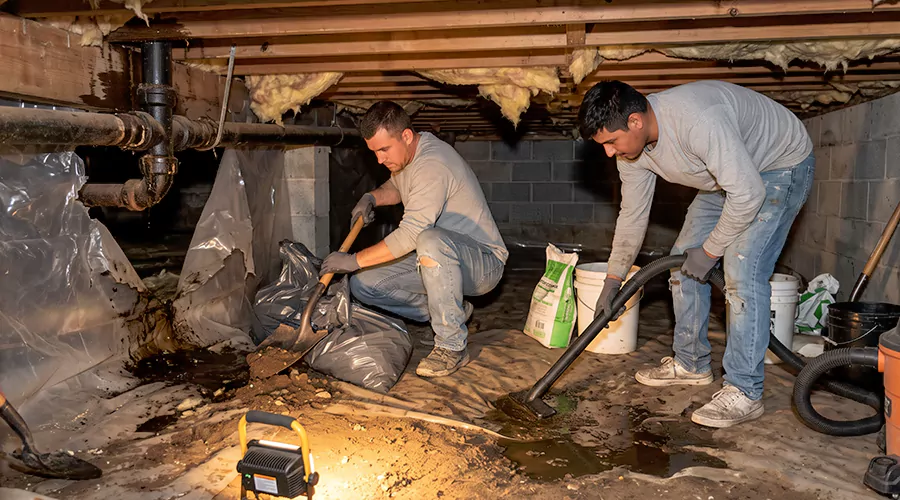
Crawl space sewage cleanup requires stopping the sewage source, removing contaminated wastewater, discarding affected porous materials, cleaning exposed surfaces, and drying the crawl space completely. Because sewage can contain harmful microorganisms and crawl spaces are confined work areas, direct contact should be minimized.
A crawl space backup can remain unnoticed longer than a bathroom overflow. Wastewater may soak soil or insulation while also contacting floor framing above.
What Should You Do First After Finding Sewage?
The first step is to keep people away and stop more wastewater from entering the crawl space. Avoid crawling through sewage to inspect the source.
Start with these actions:
- Stop using connected plumbing fixtures.
- Keep children and pets away.
- Identify whether the sewage is still rising.
- Avoid electrical wiring in wet areas.
- Photograph visible conditions from a safe location.
- Determine whether sewage has reached living areas.
Rubber boots and waterproof gloves are basic protective measures when contact with sewage is possible. Eye protection is also appropriate where splashing can occur.
How Do You Remove Standing Sewage From a Crawl Space?
Sewage water removal should begin only after electrical hazards are controlled. Depending on the depth, suitable pumping or wet extraction equipment may be used.
The removal sequence generally includes:
- Extract standing wastewater.
- Remove solid contaminated debris.
- Bag disposable contaminated material.
- Expose areas where sewage collected.
- Keep contaminated tools away from clean rooms.
Do not discharge sewage onto the yard or into a storm drain. Disposal should follow applicable wastewater requirements.
What Materials Should Be Removed?
Crawl spaces often contain absorbent insulation or stored materials that are difficult to clean after sewage exposure. These materials can hold contamination even after the visible water is removed.
| Material | Typical Response |
|---|---|
| Plastic vapor barrier | Evaluate and clean or replace |
| Fiberglass insulation | Often remove if contaminated |
| Cardboard storage | Discard |
| Exposed concrete | Clean and disinfect |
| Sound wood framing | Clean and dry |
| Wet paper products | Discard |
| Saturated duct insulation | Evaluate for replacement |
Raw sewage cleanup is very different from drying rainwater because contamination affects what can safely remain.
How Should Exposed Crawl Space Surfaces Be Cleaned?
Hard surfaces should be cleaned before disinfection. Organic debris can reduce how well a disinfectant works, so applying chemicals directly over dirt is not enough.
A practical sequence is:
- Remove solid contamination.
- Wash suitable hard surfaces with detergent.
- Rinse or remove residue as directed.
- Apply an appropriate disinfectant.
- Follow the product contact time.
- Remove remaining moisture.
- Begin drying.
Never combine bleach with ammonia or another cleaning chemical.
What Should Be Done With Contaminated Soil?
Exposed soil makes crawl space sewage cleanup harder because wastewater can soak directly into the ground. Standing wastewater should be extracted first. Heavily contaminated loose debris may need removal depending on the extent of exposure.
Do not simply cover wet contaminated soil with a new vapor barrier.
The area should first be cleaned as practical and allowed to dry. Persistent sewage odor can indicate remaining contamination that needs further attention.
How Do You Dry a Crawl Space After Sewage Cleanup?
Drying begins after wastewater and contaminated materials are removed. Moisture can remain in joists or subflooring even when the ground surface looks dry.
Drying may include:
- Dehumidification
- Controlled air movement
- Moisture checks on framing
- Removal of wet insulation
- Replacement of damaged vapor barriers
Building materials should begin drying as quickly as possible. Moisture that remains for several days can support mold growth.
How Long Does Crawl Space Sewage Cleanup Take?
A small accessible crawl space may take several days to clean and dry. A larger contaminated area can require a week or longer when insulation or structural materials remain wet.
| Crawl Space Condition | Typical Planning Time |
|---|---|
| Small contained sewage area | 2 to 4 days |
| Moderate contamination | 3 to 7 days |
| Wet insulation and framing | 5 to 7+ days |
| Large or difficult-access loss | 1 week or longer |
These ranges do not include major plumbing repairs.
What Warning Signs Mean the Damage Has Spread?
Sewage contamination can affect the floor system above the crawl space when wastewater remains for a long period.
Watch for these signs:
- Strong sewage odor enters the home.
- Floor insulation is saturated.
- Wood framing remains damp.
- Subfloor moisture stays high.
- Mold appears on joists.
- HVAC ducts are contaminated.
- Wastewater reaches electrical wiring.
- Flooring above begins changing shape.
- Odor returns after cleaning.
- Sewage keeps entering the crawl space.
Sewage damage restoration becomes more involved when contamination reaches materials above the crawl-space floor.
What Can You Safely Check Yourself?
A visual inspection from the crawl-space entrance can reveal useful information without requiring direct contact.
Check:
- Approximate water depth.
- Whether sewage is still entering.
- Whether insulation is hanging wet.
- Whether electrical wiring is near the water.
- Whether visible framing is damp.
- Whether the odor reaches indoor rooms.
Do not enter a tight crawl space containing standing sewage merely to measure damage.
When Should You Call a Professional?
Professional sewage cleanup is particularly appropriate in crawl spaces because access is limited and contamination can be difficult to control. Electrical hazards or HVAC contamination increase the risk further.
Seek professional help when:
- Standing sewage covers a large area.
- The crawl space is difficult to access.
- Electrical systems are exposed.
- Insulation is saturated.
- HVAC ducts are contaminated.
- Mold has developed on framing.
- Sewage continues entering.
- The source cannot be identified.
Crawl space sewage cleanup cost can also increase when insulation or vapor barriers require replacement, so the cleanup scope should be separated from plumbing repairs.
How Can You Prevent Another Crawl Space Sewage Problem?
Prevention depends on correcting the cause of the backup. Repeated sewage entry should not be treated as a normal moisture problem.
Useful steps include:
- Investigate recurring slow drains.
- Repair damaged sewer lines promptly.
- Maintain septic systems on schedule.
- Consider an appropriate backwater valve.
- Keep crawl-space access visible for inspections.
- Check the space after plumbing problems.
Conclusion
Cleaning sewage from a crawl space requires contaminated water removal followed by material cleanup and complete drying. Wet insulation or disposable storage should not be left in place simply because the standing water is gone. Crawl spaces can also hide damage to framing above. If sewage covers a large area or electrical systems are exposed, professional assessment can establish the safest cleanup scope.
Frequently Asked Questions
Can sewage in a crawl space be left to dry naturally?
No. Wastewater and contaminated materials should be removed before the space is dried.
Does crawl-space insulation need replacement after sewage exposure?
Often, yes. Fiberglass insulation that absorbs sewage is difficult to clean fully.
How long does crawl-space sewage cleanup take?
Many projects need several days. Larger losses with wet framing can take a week or longer.
Can sewage under a house cause indoor odor?
Yes. Odor can move into living areas through floor penetrations or air leakage.
Can wood joists be saved after sewage exposure?
Often, when the wood remains structurally sound and can be properly cleaned and dried.
Does a new vapor barrier solve sewage contamination?
No. The contaminated area should be addressed before a replacement barrier covers the ground.